





Clark discusses the New York City public school system, busing, and Reverend Milton Galamison's opinions concerning the desegregation of schools. Clark affirms W. E. B. Du Bois's theory of African Americans' double consciousness and credits Du Bois for recognizing the importance of Africa and pan-Africanism generations before other African Americans. Clark discusses the slave trade, American slaves' loss of African culture, and slave cultures in other areas of the world. He considers the positions of Malcolm X and contends that the central defining event for African American consciousness was the slave trade. Clark discusses the continuing relevance of the past to African Americans' present. Clark and Warren discuss the meaning of the term "race." Clark discusses Abraham Lincoln and several other historical figures, and he considers them in light of their role as politicians. He closes the interview by discussing the central role of ethics in the formation of the American government.
Notes:
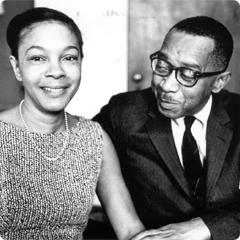
Image of Dr. Clark: Original caption: 4/20/1970 - Washington, D.C. - A new senate committee - the select committee on equal education opportunity - started it search for a way out of the dilemma posed by segregated schools in the north was told by Dr. Kenneth Clark that the continuing school segregation is "deadening and destroying" the ethical effectiveness of America's white children. Dr. Clark is a Negro psychologist from the College of the City of New York whose research was cited by the Supreme Court in its 1954 desegregation decision. Copyright: Bettmann/Corbis.
Audio courtesy of the University of Kentucky.
Kenneth Bancroft Clark
Kenneth Bancroft Clark (1914-2005) was an educator and psychologist. Born in the Panama Canal Zone, Clark and his mother moved to New York when he was five. After attending public elementary school in Harlem and secondary school in Upper Manhattan, Clark completed his undergraduate work at Howard, from which he also received a graduate degree. Clark later received a doctoral degree in psychology from Columbia University; he was the first African American to do so. Clark married Mamie Phipps Clark, who also received a doctoral degree in psychology from Columbia. Beginning as early as 1939 the Clarks conducted tests using dolls to determine the psychological effects of segregation on black children. The NAACP used the Clarks' study to challenge state-mandated segregation for public schoolchildren, arguing that the study confirmed that segregated education inflicted harm on black children. Clark subsequently organized Harlem Youth Opportunities Unlimited, which endeavored to improve the academic, extracurricular, and professional opportunities afforded to Harlem residents. Clark became the first African American to become a tenured professor in the City College system of New York. In 1966 he became the first African American elected to the New York State Board of Regents. Clark retired from his post in the City College system in 1975.
Image: Original caption: 4/20/1970 - Washington, D.C. - A new senate committee - the select committee on equal education opportunity - started it search for a way out of the dilemma posed by segregated schools in the north was told by Dr. Kenneth Clark that the continuing school segregation is "deadening and destroying" the ethical effectiveness of America's white children. Dr. Clark is a Negro psychologist from the College of the City of New York whose research was cited by the Supreme Court in its 1954 desegregation decision. Copyright: Bettmann/Corbis.
Transcript

CONVERSATION 1, TAPE 1 Searchable Text
Collapse[These digitized texts are based upon typed transcripts created in 1964. Errors in the original transcripts have not been corrected. To ensure accuracy, researchers should consult the audio recordings available on this site.Time stamps are included in the retyped transcripts to aid in this process.]
ROBERT PENN WARREN – DR. KENNETH CLARK Tape 1 April 7, 1964
[00:00:00] Warren: Fresh tape, new tape. This is a conversation with Dr. Kenneth Clark, the psychologist, in New York City, April 7th. Just to plunge in, Dr. Clark, let me read what supposedly is a quote from Mr. Galamison on the school problem in New York. “I would rather see it, the public school system destroyed” that not conform to his time table, and added – “maybe it has run its course already, the public school system.”
Clark: You would want me to comment on that?
[00:01:04] Warren: Yes, yes. That’s out of context you see.
Clark: Yes. Well, the first comment I would make obviously, is that this is an unfortunate statement, and I have the feeling that if Mr. Galamison was give the opportunity to retract it, he would. Obviously, no one would benefit from the destruction of the public school system in New York City, or anywhere else in the country, for that matter, and certainly Negroes could not possibly benefit from the destruction of the public school system. My feeling is that this was one of those impulsive statements which men often make in the heat of battle, and it should not be taken seriously – and I am convinced that Mr. Galamison would not take that statement seriously now. In fact, if he were given an opportunity, I think he would take it back.
[00:01:59] Warren: It corresponds, I suppose, to one pole of feeling, or one aspect of feeling that’s bound to be – to arise in such matters – Samson in the temple psychology.
Clark: Yes, except that I don’t take that kind of statement seriously. It’s obviously not a statement on which one could base a reasonable plan of action, or a program for social change. As I understand what the Negro is doing in America today, he is not asking for institutions to be destroyed. He’s asking that these institutions be strengthened by including him within them, and I think we have to make a distinction between emotional statements, and sometimes hysterical slogans which people will use in the heat of battle, and sound judgments, which are the basis for the long-term program.
[00:03:11] Warren: May I test this now to see how this is coming on? There’s a problem, isn’t there, in every mass movement, or even things more modest than mass movements, how you relate the emotional drives to a reasoned program. Isn’t it always a problem in all movements?
Clark: Yes, and particularly when one has to face the fact that our society does not move initially on the basis of rational, factual, or ethical appeals. It is one of the most disturbing things to me to observe that emotional, irrational appeals are much more likely to be effective in bringing about initial concern with an obvious social problem, you see. For example, and you mentioned Reverend Galamison – well, a number of people have been working on the New York City public school problem for years – for the past twenty-five years. There’s been a Citywide committee on Harlem schools, that was in existence when I was in college, headed by Algernon Black. During the past ten years a number of us from the Urban League and from other citizens’ groups in New York have been collecting data and trying to present to the Board of Education a sound, factual basis for increasing the efficiency of the schools in Harlem, and in other disadvantaged areas of the City. Well, actually nothing happened. I mean our reports were accepted graciously, and in effect filed and forgotten. We set up a series of conversations with the Superintendent of Schools, the Board of Education members, but the bureaucracy ignored a factual, rational approach to the diagnosis of the problem and to the attempts at effective remedy. Well, Mr. Galamison comes into the picture, and he moves on a level of emotional impact, you know. He organizes people to boycott the schools – to make immediate demands, you see, or demands for immediate change. Well, it’s an important reality that one must face that Mr. Galamison has had more impact within the past six months on the Board of Education of the City of New York than all of the previous years of patient, you know, reasoned, objective, factual study of this situation.
[00:06:40] Warren: Let’s make a shift to another aspect of that same problem. Clearly he’s made the impact, and clearly this has been a dramatization of an intolerable situation, let’s put it that way. What about rational and irrational solutions, however?
Clark: Well, that’s another problem. I don’t think there is any such thing as a meaningful irrational solution to the problem, but what I’m trying --
[00:07:08] Warren: Not solution, but what passes as a solution.
Clark: No, I think that effective solutions have to be based upon facts – have to be based upon reason – have to be based upon logic, logistics, and things of that sort, but I don’t think – and in looking at this society from the perspective of a Negro and a psychologist, the thing that really appalls me about this society is that one does not get to the point of even asking the rational solutions for a long-standing social ills, and maybe I should be even more specific – racial injustices, unless these injustices are dramatized for the public, more often than not, by irrational or non-rational methods and techniques. Now, the danger, of course, is the possibility of confusing the methods and techniques that are appropriate and effective for dramatizing the ills with methods and techniques that are necessary for the long-term planning and resolution of the problem. I think one of the difficulties with the Civil Rights struggle today is that such confusion occurs in certain communities. I think we are in a danger of having that kind of confusion here in New York City.
[00:08:43] Warren: You mean on both sides of the fence?
Clark: Right. Yes, I think that the Negro people understandably can believe that dramatic methods of protest, because they are effective in bringing into the consciousness of the people the nature of the problem, that these same methods will be effective in resolving the problem. Excuse me.
[00:09:14] Warren: In that connection, what do you think of the bussing proposals – the particular proposals, and the possibility of other more rational ones, if you don’t approve of these?
Clark: Well, there are two forms of bussing proposals – the one that is in operation now, where Negro youngsters and Puerto Rican youngsters from ghetto areas of the City are transported to receiving schools in middle-class areas. This is the open enrollment plan. It’s interesting that in the initial stages of this plan, when it was first proposed and tried out, there was opposition, a tremendous amount of opposition in certain areas of the City – in Queens, for example.
[00:10:12] Warren: Serious opposition?
Clark: Serious opposition.
[00:10:13] Warren: I knew there was some. I didn’t know how much.
Clark: Yes, there was serious – as in Glendale – Glendale, Queens, there was organized, prolonged opposition to bringing in of Negro children into “the white schools.” The Board of Education persisted, however, and continued the open enrollment program, so that there is no problem now on that. The present proposal, which is the basis of controversy and difficulty, suggested not by the Board, but by some of the Civil Rights groups, is that white children be transported into the ghetto schools. My own reaction to this is that this is unrealistic, is not likely to be implemented and is likely just to be a bone of meaningless controversy, you see. I think it is unrealistic because I am convinced that the bulk of white parents of children in the public schools would not permit their children to be transported into ghetto areas in New York for purposes of integration, or, for that matter, any purpose. I think their reasoning has some basis in fact. The schools in the Negro communities are woefully inferior. They are so inferior that no child should be required to attend them. The Negro parent, the working-class Negro parent, unfortunately has no choice, you see, except to send his child to these schools and I think this is criminal. The white parent does have a choice. If the Board of Education were to force white parents to make this move, the middle-class white parents would escape, either by accelerating the flight to the suburbs, or by sending their children to private schools or to parochial schools. Rather than facilitating integration, I think that type of program at this time, and at this level of development of race relations and racial attitudes in Americans, would accelerate the segregation problem. It would make the public schools almost totally a minority group – and the poor white.
[00:13:18] Warren: It would accentuate the class split too, wouldn’t it, as well as the racial split, is that true?
Clark: I’m convinced of that. Yes, that it would – that the public schools would become exclusively, predominantly, if not exclusively the minority group and lower class white.
[00:13:39] Warren: Is this true – I understand from various sources, that more and more middle-class Negroes are sending their children to private schools, too.
Clark: That’s quite true.
[00:13:50] Warren: This is – this split is going on very rapidly.
Clark: Yes, one of the ironic things about the leadership of the present public school fight in New York is that the top leaders of the fight – Reverend Galamison and some of his top associates, have their own children in private schools.
[00:14:08] Warren: So I understand.
Clark: But I would consider this as much a compliment to them, as a criticism, because what in effect that they are saying is that they are really fighting for the adequate and appropriate education, the democratic education of all children and not just their own. But it is a fact that they, recognizing the inferiority of the schools which their children would be required to attend, are willing to make whatever sacrifices are necessary to send their own children to private schools.
[00:14:42] Warren: That argument would cut both ways, wouldn’t it? A white father or mother, objecting to having a child sent to a Harlem school would be using the same argument to himself that Reverend Galamison would be using.
Clark: Exactly, exactly. And there would be no more basis on the face of it to accuse the white parent of racial prejudice, than to accuse Reverend Galamison of racial prejudice.
[00:15:08] Warren: Or of snobbery.
Clark: Or of snobbery. It could be for the white as much a reaction to the inferiority of the school, as it is for the middle-class Negro, who refuses to send his children to existing public schools.
[00:15:21] Warren: That point is not often recognized, however, is it?
Clark: But, it’s no less real.
[00:15:28] Warren: It’s no less real. I’m talking now about the way emotions operate, not about the way that reason operates.
Clark: Very true.
[00:15:35] Warren: May I switch the topic a little bit. Years ago I read, began to read DuBoise [sic], and I was struck at the time by his stating and coming over and over again to the topic of the split in the Negro psyche – this – or what he calls that split – the drive toward the mystique doir, toward the African heritage, toward the sense of a Negro culture here, as well as elsewhere, as from Africa. This sense of identity and commitment of a Negro culture, as one pull, one pole of experience, and one desire for development. The other – the exact opposite – the moving into the Western European, American-Judeo-Christian tradition, and absorbing and being absorbed into that as fully as possible, even with the possible consequence of the loss of – this is extrapolating from him – of loss of his sense of racial identity at all – and so blood absorption. These are two separate impulses. Does this strike you as a psychologist as a real problem or not?
Clark: It certainly strikes me as another bit of evidence of Dr. DuBoise’s shrewdness and his ability to anticipate and to see beneath the surface problems to the basic problem of race in America. As a psychologist, I’m convinced that DuBoise was correct. The Negro in America is ambivalent in his feelings about his place in the larger society, and his feelings about himself. It would be – it would have been a miracle if he could have adapted to the whole history of cruelty and oppression and come out of this with a positive, unalloyed, positive image of self, or a set of feelings about the society which has oppressed him in the context of a democratic ideology. The present form of this, and of course, one of the things we ought to recognize right away is that DuBoise was one of the first Americans – Negro or white, to recognize the importance of Africa, you see. DuBoise was talking about Pan-Africanism and the fact that Africa was going to be the significant area of the world in the latter part of the twentieth century, as early as the beginning of the twentieth century. He was saying this when other people barely knew what Africa was or, you know, when the average, even the average intelligent American’s image of Africa was largely that of a bunch of savages and cannibals. DuBoise --
[00:19:28] Warren: So was that of most Negroes at this time. A place to send missionaries.
Clark: That’s right. That’s right – was their concept of Africa. But as early as the first and second decade of the twentieth century, DuBoise was pointing to Africa as significant area of world concern.
[00:19:49] Warren: Do you see any continuity, cultural continuity of the American Negro with Africa?
Clark: Personally? Do, I personally?
[00:19:56] Warren: Yes, do you see any – observe any?
Clark: Well, personally, I don’t. Personally, I think of Africa pretty much the way I think of Asia, or Europe, or South America. In terms of any conscious or cultural continuity between the American Negro and Africa, I think one has to be – to be realistic, one has to recognize that American slave trade systematically sought to destroy any such continuity. The Africans were not permitted to be brought – well, they were not brought here and given the opportunity to continue any of their prior heritage.
[00:20:43] Warren: There was no cultural entity called Africa anyway was there? It was a mass of different cultures.
Clark: A mass of different cultures – from what I have read about the slave trade – the slave traders were not anthropologists. They didn’t go over there trying to bring people from the same cultural unit into the Afri – into the American scene.
[00:21:12] Warren: Have you read a book by Stanley Elkins called Slavery, published by Chicago a few years ago.
Clark: No, I haven’t.
[00:21:19] Warren: It deals with the psychological effects on the slave in America, as compared to the psychological effects on the slave in other slave societies, like Brazil, or Cuba, or such places.
Clark: I would suspect that maybe he would conclude that slaves in America were subjected to more intense and effective degree of de-culturation than the slaves in Brazil.
[00:21:53] Warren: Right – also the creation of the “Sambo” was worked out with the paternalistic treatment, rather than where there’s totally one- the owner controlled all – with the State behind him, opposed to Central America, or South America, or a system where there is a Catholic culture, where the priest could demand the sacrament of marriage – would tend to maintain the family – where there’s a State overseer who might be against, in theory anyway, the owner. And, the question of slave revolt then comes up. Why are they all so common in Catholic countries and so rare, despite Mr. Aptika, in America -
Clark: In America. Could it be also population difficulties, or differences, that – in the West Indies, certainly, the form of colonialization was such that the population – the white population was never that much greater than the slave population. And, with absentee ownership, which characterized the West Indian slave-ocracy, and to a lesser extent, the South American, this was the opposite in America, where you always had the whites in majority. And just the risk involved in revolt would be greater in a situation where there was a stable majority white population, in contrast to an economy where you had a relatively unstable, absentee ownership and minority white population.
[00:23:41] Warren: That would seem to be a factor in any case. Though he centers most of his discussion on the matter of the psychological effect that the system of the United Sates -
Clark: I think part of that psychology involves the realities of numbers.
[00:23:54] Warren: Reality of numbers and the question of getting, by – as a corollary – a Negro community, or rebuilding one of the new context. But this bears on the question, doesn’t it, of achievement of the Negro in this generation, and in some time before in achieving an identity. This is a question – not a statement – if, but if you take Elkins’ theory – the problem of achieving an adequate self-image, a satisfactory identity would be stronger, greater in America, despite certain superficial benefits that the Negro has had here – than it would be in other societies.
Clark: The problem of establishing --
[00:24:47] Warren: Would be still more difficult in America.
Clark: Establishing a positive identity, yes.
[00:24:48] Warren: Yes.
Clark: Yes, except that one can establish an identity through protest. One --
[00:24:58] Warren: Now – now.
Clark: Now, and I think – one looks at the Negro spirituals one sees, or at least I think one can interpret the spirituals as attempts and struggles towards some kind of positive identity through protest, through hope, through a plaintive, anguished desire for a better lot. I mean, I can’t buy totally, the feeling that oppression destroys the identity of surge of human beings. I think, for example, if one looks at the Jews, who have gone through much longer periods of oppression, cruelty and barbarity, you sometimes get the feeling that the Jewish identity has as its nucleus, around which everything else clusters, the protest against oppression, you see – that the Jew sees himself as someone who exists because he has been oppressed.
[00:26:23] Warren: He also had, of a differing degree anyway, a sense of a culturally continuity, and knowledge of his history.
Clark: Sure, true. Well, a knowledge of his history, with a knowledge of the series of oppressions, the series of difficulties that he has had with --
[00:26:42] Warren: Also the triumphs he has had.
Clark: Triumphs – but I think the triumphs were always earlier.
[00:26:48] Warren: Earlier, but they were there.
Clark: They were there as maybe the rock on which, then, the defeats and the oppressions could rest and be brought into a more positive kind of construct.
[00:27:03] Warren: This brings us to Malcolm X then, doesn’t it?
Clark: How?
[00:27:08] Warren: In creation of the past. Assuming his to be spurious, as opposed to what might be the real past.
Clark: Well – I don’t know what it is the real past for the American Negro. I think that Malcolm X is an example, or – Black Nationalism of which he is merely one form – is an example of the struggle to create a past, you know. I think that, for example, when the Muslims call themselves true Muslims because this was the heritage of their forefathers, - I’m not sure how much reality they have here. I mean, I think this is real in the sense of a wish – real in the sense of a satisfying sort of fantasy.
[00:28:04] Warren: Heliots, that was the old – any historical record would indicate that. Mohammedism came very little into Africa.
Clark: All right. If one were to be bluntly realistic and logical about this, it would seem to me that the Negro – the American Negro’s past functionally begins with the slave trade, you see. This is the only verifiable continuity that he has. Obviously he has something before that, but in terms of the meaning of his present experience and existence, is to be understood in terms of the seventeenth century events – catastrophic events, I mean, disruption of whatever he had in Africa, did not carry over here. He was uprooted. He was literally snatched away from whatever past he had, and had to begin anew here.
[00:29:19] Warren: Now, psychologically what weight do you put on this fact – say, on the Negro situation, as opposed to that of say, the Jew, or the Nisei, or any other minority group which brings to America a form tradition and has a “glorious past” it knows about, you see.
Clark: Well, obviously, that type of advantage provides some stability – stability of self, stability of the group. It provides a rallying point for the individuals who comprise the group. The Negroes’ rallying point has had to be shared oppression, you see. He has had to build a sense of group, a sense of belongingness out of the common experience, and the common experience in terms of this new culture. Mainly, he was oppressed of this new culture, he had a humanity, he had the human reactions against oppression, and he had the human desire to become free of the oppression and he has translated his desire to be free of the oppression as also meaning to be incorporated into this system, without regard to his color, because he sees himself as an integral part of this society. He helped to build it. He has contributed as much as any other group, who have comprised America, and more than most.
[00:31:02] Warren: Excuse me. This is the end of Tape 1, conversation with Dr. Kenneth Clark. Proceed on Tape 2
Collapse
CONVERSATION 1, TAPE 2 Searchable Text
Collapse[These digitized texts are based upon typed transcripts created in 1964. Errors in the original transcripts have not been corrected. To ensure accuracy, researchers should consult the audio recordings available on this site.Time stamps are included in the retyped transcripts to aid in this process.]
ROBERT PENN WARREN - DR. KENNETH CLARK Tape 2 April 7, 1964
[00:00:09] Mr. WARREN: Can we make out a case for the Negro situation as being actually advantage -- an existential advantage psychologically?
Mr. CLARK: I don’t quite understand what you mean by that, existential advantage.
[00:00:24] RPW: The fact that he is not burdened with a past, that he is free to create -- which is not true of some others burdened by a past.
KC: But I think the Negro is burdened by a past, which determines the nature of the future which he is seeking to create. I think that he is burdened by a past that being with disruption, that begins with stark and flagrant cruelty and barbarizy -- this is the beginning of his past, in a sense -- and this past continued into about two hundred years of systematic exploitation and cruelty, which is slavery – this is his heritage and he has been the object of the problems of whites who have this glorious past. He is in the culmination of the meaning of the white culture in civilization in terms of dehumanization of him. This is his past -- this is the past that he is burdened with and this is the past of the whites who are so proud of their past, you see. The Negro becomes the personification of all that is meaningful in the white man’s past, because he now is the stark – well, what is it -- the stark example of Magna Charta and all these things -- he is the example of the meaning of the white man’s Christianity, etc., - alright, this is a complex past and its a kind of past which, as I said before, determines the nature of his present and the kind of future he is insisting upon. He is insisting upon a future that will make the white man whole.
[00:02:59] RPW: Make the white man what?
KC: Whole -- w h o l e -- There is something ironic about this discussion about who has and who doesn’t have a past, when actually the present has fused the past of Negro and white -- I mean this may be terribly disturbing to the white -- by the way, this image of fusion is both literal and figurative, I think here, because -- you asked me about my feelings about Africa -- it might be disturbing to the general American public for a Negro to dare to say that he feels no more identification with Africa, than he feels with Denmark or Ireland, but actually in terms of what he is, he is as much Irish or English or Danish as he is African, because of this more literal fusion - -
[00:04:11] RPW: You mean blood fusion.
KC: -- blood fusion that has occurred in America during these past three hundred years. You have a blood fusion, you have an historical fusion, you have a psychological fusion, and despite the -- I certainly haven’t worked this out, I wish I had a little time and luxury in which to try and work it out, but much of the ambivalence that DuBois referred to and which we see so clearly today among Negroes, may be a reflection of this total fusion that he is, you see.
[00:04:51] RPW: Do you see more resistance now to the blood fusion on the part of Negroes and the past, either in actually inter-marriage and actual inter-fusion of bloods, licitly or illicitly, and in the emulation of the white physical idea that was true say -- oh, a generation ago?
KC: I think on the ideological level, there is probably a greater resistance on the part of Negroes to mixture with whites now, than they have been in the past, but I think we ought to be careful to make a distinction between ideology in verbal postures and what actually happens -- I am not sure and I would like to know where one can find reliable statistics on incidents of inter-marriage over a period of time.
[00:05:59] RPW: There is a paradox here, isn’t there -- implicit some on situation?
KC: Unquestionably. I think the American race is best seen in terms of paradox and contradiction and inconsistency and mess -- verbal mess, coexisting with behavioral contradictions is a very mess, you see.
[00:06:23] RPW: Do you remember Norman P piece in Commentary sometime?
KC: I certainly do.
[00:06:31] RPW: Solved only by assimilation -- What sort of sense does that make.
KC: Well, I reacted to Norman’s piece, and my first reaction was that this was a curiously and scathingly honest piece -- the second part of my reaction was, that I thought that his solution made no sense at all, for a very simple reason -- that it didn’t work in the past and there is no reason to believe that it is going to work in the future. Norman P talked about assimilation of whites and Negroes as if this was something that was new --- was going to happen, you see. What this man -- I don’t know why he didn’t understand it -- but what he apparently didn’t understand was that part of the problem was this -- that while males have long been exploiting Negro females -- this is part racism, and one has to look long and hard to find any pure blooded American Negroes, and these are not -- the mixture of the American Negroes is not a reflection of preponderance of white women bearing children from Negro males, you see. Well, if miscegenation, which is the real word here, rather than assimilation -- if miscegenation hasn’t worked from slavery, if a white male could be as brutal toward his own flesh and blood as he was toward other Negroes or colored in America, why does Norman P. think that legalizing the mixture is going to change the psychological and social situation any.
[00:08:36] RPW: Anyway, it is a long postponement of any solution or any m at the best.
KC: Right. I think what he is asking for will not be a means toward an end -- an ethical end -- but will be an indication of the fact that the ethical end was obtained by other means, you see. Once you get a meaningful equal status human form of interracial mixture in America, this would be one of your best indications that the complexities of the problems of racial cruelty have already been resolved.
[00:09:21] RPW: There is some argument, of course, among sociologists, that the great melting pot hasn’t been melting very well -- the Italians, the Irish, the Jews -- have actually had pretty hard assimilation, but not central assimilation.
KC: Well, you need only to look at the politics of such northern urban centers as Boston, New York, Chicago, to see that this is the politics of ethnic groups – ethnic division of the available political spoils. Look at New York and you see that almost all power centers are divided in three, three, three -- you know – Catholics, Protestants, Jews -- and among the Catholics, the struggle for status or control in terms of Irish Catholics, Italian Catholics, Polish Catholics -- these are some of the facts of American political social reality, at least in northern urban areas. Now in the South, you have these subordinated by the South’s great preoccupation between the white and black, you see -- and I suppose that one of the most disturbing things that could happen to the South is for an accelerated migration of black, which would then confront the whites with the problems among themselves, you see.
[00:11:03] RPW: That is true. It is happening already -- for instance, you always have a Republican governor in Louisiana, this last election.
KC: That’s right. And of course if Senator Russell’s plan for disbursing the Negro population out of the South were ever to be successful, then Senator Russell might find that his class of whites would be in terrible jeopardy from the working class, poor whites in the South.
[00:11:33] RPW: The populas movement might be revived.
KC: Oh, yes -- and with a vengeance here. --------
[00:11:43] RPW: That is the worse news I have heard in a long time.
KC: Worse news?
[00:11:47] RPW: Worse news I have heard in a long time -- breaking this up. --------
KC: Oh!
[00:11:54] RPW: This tape with Dr. Clark to be resumed. --------
Collapse
CONVERSATION 2, TAPE 1 Searchable Text
Collapse[These digitized texts are based upon typed transcripts created in 1964. Errors in the original transcripts have not been corrected. To ensure accuracy, researchers should consult the audio recordings available on this site.Time stamps are included in the retyped transcripts to aid in this process.]
ROBERT PENN WARREN - DR. KENNETH CLARK Tape 1 April 15, 1964
SECOND CONVERSATION WITH DR. KENNETH CLARK
CONVERSATION 2, TAPE 2 Searchable Text
Collapse[These digitized texts are based upon typed transcripts created in 1964. Errors in the original transcripts have not been corrected. To ensure accuracy, researchers should consult the audio recordings available on this site. Time stamps are included in the retyped transcripts to aid in this process.]
ROBERT PENN WARREN - DR. KENNETH CLARK Tape 2 April 15, 1964
SECOND CONVERSATION WITH DR. KENNETH CLARK
[00:00:09] A. We were talking about Lincoln and our conversation between tapes -- you said that one judges a man by his choice of a said issue on which he will put the big money on the card, is that about right?
B. Yes, I think that each of us from day to day, in the total pattern of our lives, must make choices as to what we are really going to stand for and stand on, and take the big risk for, I suspect in the final analysis, we are judged by our contemporaries and by others on what we choose and what we consider important and salient enough to put the big stakes on and to take the big risk for.
[00:01:09] A. Well, Lincoln dodged the abolitionists like poison.
B. Of course he did.
[00:01:12] A. Now, how do we judge this fact about Lincoln?
B. Well, history has judged Lincoln in terms of the priority and the importance of the Union.
[00:01:23] A. How do you judge him?
B. Well, obviously, I must now judge him on that ground because ostensively or on the surface, we have the union which he sought to preserve and the present Civil Rights trouble is being fought out within a unified nation, and if you put Lincoln’s decision in a historical perspective, I suppose the rational and intelligent judgment is -- that this was a correct choice that he made --
[00:01:56] A. Would you imply the same amount of argument to say -- some hypothetical Lincoln we could produce now who would say the most immediate question is not the most immediate drive for Civil Rights? Hypothetically, say -- only in some point, not go all the way you want it to go, ahead of racial justice.
B. Well, let’s not be too hypothetical, because I think we get -- we can get a lot of specific examples of this. Let’s take the Communists in World War II -- prior to the Hitler-Stalin pact, the Communists were very concerned about racial discrimination and segregation in the United States, and they were busy telling Negroes -- don’t join a segregated army -- you know -- fight for your right to be a full American, etc. --
[00:03:04] A. Can we cut back to Lincoln again on this matter of --
B. I think we were saying something just before the phone rang -- yes, I want to continue this about the Communists, because I think they put in perspective this problem of practical and expedient determinence of what one says and what one does. After the Hitler-Stalin Pact, the Communists changed their tune and their advise [advice] to the American Negroes -- the Nazis were not so terrible any longer, there were all sorts of justifications and of course there were many Communists who were disillusioned at that time and left the party. But, when Hitler attacked Russia, in spite of the Pact, then the Communists were not any longer so concerned with the indignities heaped upon Negroes in a segregated army -- they wanted all Negroes to go out and volunteer to fight the Facist [Fascist], no matter what the conditions under which they were required to fight, you see, the same people who were trying to seduce me into the party with crocodile tears about the humiliation of segregation, etc. were not calling me -- and I mean literally, the same persons were talking to me now after Hitler attacked Russia -- and calling me a Black because I was still concerned with segregation. To this day, I am thankful that whatever it was that made me suspicious of them, when they seemed so much on my side, saved me from ever getting involved with them, because now -- on one end you could say -- look, these people were just being practical, they were establishing what was a priority to them, what was salient -- to them the relationship with Russia or the future of Russia was more important than how any individual Negro felt about being segregated --
[00:05:50] A. Well, that is the way Lincoln felt about it. Lincoln couldn’t have cared less presumably about what any individual Negro felt --
B. Frankly I don’t think that -- I think that Lincoln basically cared --
[00:06:00] A. Well, let’s read his words -- take them for what they were -- I will save it, I am not nor ever have been in favor of bringing about any way equality of the white and black races.
B. Do you know what I really think about that? I don’t believe that. I think he said it, but this problem of political expediency can cut both ways, you see. One of the fascinating things -- gosh, I don’t know how to preface this, maybe I shouldn’t preface it -- just ask your reaction to it after I say it -- I think of of the peculiar and fascinating things about some Americans is the apparent awkwardness that they seem to have in dealing with deep ethical problems -- that actually they are more ethical at times, than they want to pretend, you see. For example, I think the Marshall Plan -- a practical politician insists upon the pose that this is a purely practical economic expediency. I sometimes seem to be rather caught dead than offering an equally tenable rationale, that this is a latter [matter] of human concern and compassion. Now frankly, I think that the is part of the turmoil, turbulence, the conflict, the chaos that American races imposes on otherwise decent Americans -- that they must mask, or seem to go to the trouble to mask their decency in order to be in a position to act decent.
[00:07:56] A. Let’s take William Lord Garrison -- now he was certainly explicit enough -- he would damn the Union to hell and said so, on the matter of abolition -- not on the matter of equality but on the matter of abolition of slavery. After the war, he couldn’t have cared less, but he cared about the future of the freed Negro -- in fact he was against giving them the vote . Now what do we make of this in that case?
B. I think this is another symptom of what I call the American moral schizophrenia, which is part and parcel of a Christian democratic nation, emerging and establishing the tremendous experiment in government based upon ethical ideals at the same time that it has human slavery, you see. I just don’t think that America ever got over this deep ethical moral problem, and you get these symptoms taking various forms - - -
[00:09:06] A. it is not -- but let’s take a bigger jump, then. If we put D
and W and Abraham Lincoln and Ethiopia the
campaign and the Communists in the same pot -- what we are coming out with is the complication of -- you might say -- history and ethics in politics, aren’t we?
B. Yes, I would put them in the same pot, but I wouldn’t say they have all become indistinguishable because they are in the same pot -- They are in the same pot in a way, but I think Americans are in a peculiar place in that pot.
[00:09:53] A.Tell me about that now.
B. Well, I think the peculiar thing about America is that this is the only nation that ever started out saying that it was going to develop a system of government based upon ethics. Wherever you found the ethical problem and the insensitivity problem and the inhumanity-to-man problem anywhere else, you found it almost as a “natural spontaneous expression of the animal in man or the problems of man -- but the problems with America is that you had Jefferson, you had Franklin and you had these peculiar combinations of philosopher-politicians, you see, who had an opportunity that most other people never had -- namely to establish a philosophical and ideological base for a government.
[00:11:01] A. They made the opportunity.
B. Well yes, they made the opportunity on the basis of the philosophy by the way, you see -- this is the first time -- I don’t know if I am exaggerating this or maybe I am reflecting my ignorance of world history -- but I don’t know that there is any other example before this, of a group of human beings setting themselves the task of evolving a government predicated upon things such as rights, you know, and man’s relationships and responsibilities to his fellow man, you see. Now I submit to you that this experiment is such a glorious and frightening and awesome one, that it would have had -- well, I don’t know -- what I mean to follow this out with -- that it would have had tremendous impact, positive impact, were it not contaminated by the fact that as they were doing this, they themselves were the victims of the fact that it hadn’t been done before, they were themselves the victims of human slavery, you see -- they had the past on their backs - - -
[00:12:27] A. But how can you abolish history? The question always coming around is this, isn’t it -- how does an ethical idea develop in history, it can’t be born without a history, can it? And there we are, we are stuck with our history.
B. No, it can’t be born -- but I don’t think that is exactly what the Americans -- yes, they were stuck with their history, but they were stuck with the conqueredization of their history in the presence of the black man - -
[00:12:52] A. And Thomas Jefferson was a slave-holder. What does that mean to you -- does that invaluate the Declaration of Independence?
B. No it doesn’t invaluate the Declaration of Independence, but it imposes upon us levels of interpretation of that Declaration of Independence that go beyond the words -- you see -- that actually you cannot understand the Declaration of Independence that go beyond the words -- you see -- that actually you cannot understand the Declaration of Independence purely in terms of Jefferson’s paraphrasing of Loch alone, you see -- you have to also understand this in the context of the fact that Jefferson had slaves at the same time that he was righting this, and he not only had slaves but he was also aware of the inconsistency between what he was writing and the fact that he held slaves.
[00:13:40] A. Do you believe in social society as an idea?
B. Frankly Mr. Warren, I don’t know what I believe in --
[00:13:52] A. People who do are living in a capitalistic society, making their livings in it and doing the best they can.
B. No -- I have stock, I purchase stock on the stock market -- I believe in this capitalist society -- I don’t believe that it is always just or sensitive or efficient -- I don’t think it is as always efficient as it could be -- Not even when I was young, an undergraduate in the thirties, did I believe that there was Utopia in the Soviet Union -- or I don’t know why, don’t ask me why --
B. general socialist - -
A. No, I can’t get myself at this age -- I am about to be fifty, I will be fifty this year -- and at this age, I can’t believe in generalized abstract societies -- you know -- I believe in the inevitability of a struggle. I believe that human beings will develop the most vital kind of society in those societies in which they are free to struggle towards developing the best that they can arrive at. I don’t believe in fixed societies, and I am clearly aware of the fact that I am being incoherent now.
[00:15:24] A. Well, I don’t think so. What do you think about Robert E. Lee -- after Jefferson? Cases abstraction.
B. I think that Robert E. Lee was a gentleman -- I think, from everything I read about him, that he was also tortured. I think that he was a civilized human being who was again caught in this -- I repeat -- the inevitable moral schizophrenia that American society imposes upon all Americans, you see -- and by the way, I am not using this term moral schizophrenia necessarily in a derogatory way, because I can conceive of the absence of the moral schizophrenia, which would be stagnation, and that I think for example, the Nazis had no schizophrenia--
[00:16:18] A. No schizophrenia - -
B. That’s right, you see, so if you understand my illusion to the Nazis, you can understand what I am saying about the moral schizophrenia of America --
[00:16:27] A. Then it had no moral schizophrenia -- nor did Stalin -- nor did R
B. Nor did Stalin, you see, nor did a lot of the -- nor does Malcolm X -- there are a lot of people who know exactly --
[00:16:43] A. But you do -- I am beginning to feel that you do --
B. Well, I don’t think that there is any question - -
[00:16:58] A. Well, you speak -- didn’t you talk about the sympathy of Lee -- you are in a situation of moral schizophrenia -- or of Jefferson, you are in a situation of moral schizophrenia.
B. Of course. I have empathy for these men -- you know, Baldwin in one of our interviews last year - -
[00:17:19] A. I read in the little book - -
B. I remember Baldwin said something about -- I asked him was she white -- he was talking about one of his teachers and I said “Was she white”? He said “Well, yes, she is a little bit white and a little bit colored” -- this is, I don’t know how Baldwin meant that, but when I heard it, I knew that it was a penetrating truth about all Americans, you know, that they are a little bit white and a little bit colored -- I mean that it is not possible for any American with any degree with sensitivity to be -- Malcolm X to the contrary notwithstanding -- all black or all white, I mean there is an empathic shackle --
[00:18:13] A. I suppose what I am driving at in these questions, was not a particular answer to the question, but to open the question of “How moral absolutes, ethical ideas relate to historical process” -- That is what we had sort of nagging around, I suppose.
B. I guess what we are also backing into is the realization that they don’t ever determine historical process in terms of the absolutes -- the absolutes themselves don’t generally determine the historical process but the constant necessity to make some kind of accommodation between or among absolutes or among forces among which might be the absolute, you see.
[00:19:07] A. In that context, what does freedom now, mean?
B. Freedom now means a demand, it means an absolute, it means an insistence, and in the future of course, it is going to mean some kind of accommodation -- but the greater the accommodation that has to be made, the greater the weakness of the total social fabric. Unfortunately -- oh, I don’t know that is unfortunate, it might be quite be is like -- there are many people who are stating and mouthing the slogan freedom now, who have a rather simplintic [simplistic] literalistic view of it, you see, and maybe this too has always been true historically, that the cutting edge of any movement must by virtue of its -- I mean, like John Brown -- cutting edge has to be literalistic in order to assume that role, you see.
[00:20:21] A. What do you think of John Brown, by the way?
B. I think he is a very powerful force in the growth and development of this country, and - - -
[00:20:28] A. He was a force, clearly -- what do you think of him -- how would you evaluate him morally or psychologically -- or both?
B. Well, psychologically, the simple designation of John Brown might be too simple -- he was a fanatic, a neurotic, a liberalist, an absolutist, a man who was so totally committed to his commitment that nothing including reality stood in his way.
[00:21:02] A. How do you treat a man like that in ordinary society?
B. Society can take care of itself with men like that, it always has -- see what it did to Christ - -
[00:21:11] A. Do you think Christ and John Brown are to be equated?
B. Oh, unquestionably --
[00:21:17] A. Equated psychologically? In their values or simply in their neuroses?
B. In their values, in their neuroses, and of course in their end.
[00:21:26] A. Christ said “I am the Prince of Peace” -- John Brown lived in a dream of bloodshed. That is some difference, isn’t it?
B. Yes, but Christ also took -- what was it took -- ran money changes out of --
[00:21:39] A. but this is to be aquated [equated] with the P Massacre?
B. Alright, don’t me that far - -
[00:21:45] A. We have to, if we are going to talk about it, you know --
B. Now look, Christ was clearly a person committed to values other than those which were prevailing in his time.
[00:22:03] A. Or to our time either.
B. Or to our time, yes. He not only was committed but the extent and depth of reality of his commitment was expressed by his life, you know -- the fact that he lived his commitment. He did not make the primary accommodation to the realities that even some of his disciples did. Alright -- Christ was a typical, Christ was alienated, Christ has values that he was willing to run -- positive values that he was willing to run risk for, and he paid the ultimate price. Christ, Socrates, John Brown -- these people are irritating --
[00:22:51] A. Let me ask you a question specifically -- suppose a man like John Brown, with the same burning eye, came into your office and said “I’m tired of fooling around in this matter, I’m going down to Mississippi and take six or seven strong, determined people with me and I am going to slaughter the governor and his entire staff in the Capitol and come out and say ‘Rise and follow me’ “ -- now this is almost an exact parallel -- what would you do about this man who came to your office and asked you for a hundred dollars to help finance the trip?
B. First, I wouldn’t give him a hundred dollars --
[00:23:30] A. Would you give him fifty?
B. No, I wouldn’t give him anything --
[00:23:33] A. Would you call the police or would you wish him well?
B. I don’t think I would do either -- I don’t think I would call the police because - - -
[00:23:40] A. Would you call the doctors?
B. I would probably see what I could do to help this man, if it would not inconvenience me too much -- or if it would not involve me with him too much, or if it would not establish a clawing kind of relationship with him that I would not want to have, you see.
[00:24:00] A. What if this man was a hypothetical man with a wild eye and a scraggly beard and a big adam’s apple, who comes in this office and asks you for a hundred dollars to finance the killing of Governor Patterson and
Mississippi, and John Brown, going to Murray Forbes and his other friends in Boston?
B. Me. That is the difference -- me and time, you see.
[00:24:27] A. Alright -- you know more about psychology than they did, you see, and more about history -- and therefore you wouldn’t want any part of it.
B. And not only that, I am frank to say to you, I am a college professor -- I have a vested interested in either/oring, you see -- I have a vested interest in maintaining issues on a level of discussion rather than action, and certainly anybody who says anything to me about bloodshed is not going to get a sympathetic response from me, you see.
[00:25:06] A. You said that John Brown is like Christ, psychologically.
B. In one respect, yes.
[00:25:12] A. In which respect was this, now?
B. The totality of his commitment, his alienations, his willingness to run risk --
[00:25:23] A. Now, mad men are that way, too, you see -- men are mad in that way -- so we don’t make man as equal virtue do you, automatically on that mere point?
B. No, except that it isn’t always that easy --
[00:25:37] A. I don’t mean to maintain that it is, but I do think we ought to explore it.
B. That’s right -- it isn’t always easy to differentiate between a “madman” and the martyr, or the person who irritates the status quo to the point of demanding of the status quo, some kind of accommodation between where it is and where he would want it to be.
[00:26:01] A. If the madman happens to tie in with the moral cause and happens to have the bad or good luck to get bumped off in the process, you see --
B. Who else does this except madmen?
[00:26:17] A. We must trust the madman, is that it, to be our moral guardians?
B. Let me back up a little. Madmen -- of course you could define madness as daring to believe that something which you value and believe is so important, that it is worth risking your security, your comfort or your stagnation for -- you could define madness as any kind of alienation which brings you in open conflict with the prevailing values and patterns of your society. So defines, yes -- I would say who else but madmen defies constituted authority or ways of life.
[00:27:24] A. So we must depend on madmen --
B. So defined --
[00:27:30] A. You are defining them clinically now, is that it?
B. I am not defining them clinically because -- I am defining mad men to mean those who believe something so deeply, so strongly, as to --
[00:27:48] A. Suppose a man is also clinically mad -- let’s just assume this -- then what do we do about his relation to an idea?
B. Well, it is all very easy -- it’s extremely easy --
[00:27:59] A. He is mad -- he is clinically mad, but he also utters truths in his clinical madness, or does it get tied in with an action --
B. I am more concerned with Vangl’s [Vangelis] paintings than I am with the fact that he was mad. I must confess that I will probably be more concerned with what the man says and stands for and does --
[00:28:23] A. Let’s take it this way -- we don’t know the real facts, so we can’t be sure -- but you judge the morality of an act by the consequences,
consequences and not by the nature of the act, is that it?
B. Mr. Warren, you’re pushing me -- No, I am not always sure that I would judge morality of acts only by the consequences -- I think there are some acts which on their face, are moral without regard to consequences, and could not therefore possibly have moral consequences -- I mean, I think that even if one sought to rationalize consequences on the grounds that they were morally, these consequences would be contaminated by the immorality of the act - -
[00:29:16] A. John Brown is almost a test case for this - -
B. Boy, you certainly are fascinated with John Brown and he is one of the most --
[00:29:26] A. He is a test case --- you brought him up, I didn’t.
B. Alright, I brought him up -- I’m not going to abandon John Brown -- you’re right, John Brown was an addict, John Brown was mad, John Brown was a murderer, John Brown was clearly not respectable but --
[00:29:53] A. How much does the word ‘respectable’ take back the condemnation in the other foot words? You are a psychologist --
B. A great deal -- I suppose I deliberately put ‘respectable’ at the end of that --
[00:30:07] A. To disinfect murder?
B. No, not necessarily to disinfect murder, but to deal with the fact -- the reality, that respectable abolitionists were talking quite a bit, and while I would not join John Brown’s party of murderers, any more than I would join Malcolm X’s call for a -- what did he call it -- rifle club or something of that sort -- and I personally recoil against bloodshed because I think this is just another form of human idiocy. The fact still remains that major social changes toward social justice in human history, have come almost always -- if not always -- through irrational and questionable methods.
[00:31:13] A. That is -- we have to play a double game in terms of all social movements, is that right -- we play a game of making somebody else pick up the dirty marbles for us -- a white man in a nice house in Belle Meade, Nashville or in Jackson suburbs -- let those cops and those rednecks pick up the marbles down there on North Barry St. or Lynch St., while they keep it clean --is this it? You and I have played the same game in terms of history -- we expecting the boys to make the big stink that is a real threat to a reasonable proposal, is that it?
B. That’s one way of putting it -- I would prefer not to put it that way, I would prefer to put it this way, that apparently rational reasonable men who are seeking a change in the status quo, are generally ineffectual -- changes in the status quo are more likely to come from irrational, unreasonable, questionable men.
- - - - - - - -
To be continued on tape #3.
Collapse
CONVERSATION 2, TAPE 3 Searchable Text
Collapse[These digitzed texts are based upon typed transcripts created in 1964. Errors in the original transcripts have not been corrected. To ensure accuracy, researchers should consult the audio recordings available on this site. Time stamps are included in the retyped transcripts to aid in this process.]
Tape #3
April 15.
SECOND CONVERSATION WITH DR. KENNETH CLARK
[00:00:09] A. That is, you are more willing to trust the orderly process of law and the long range historical process giving human guidance and--
B. And vigilance -- human guidance and vigilance.
[00:00:24] A. - - and vigilance, without asking for an rebilitory moment to change human nature, is that it?
B. Or conversion -- yes. I don’t feel happy with myself in my skepticism about any meaningful chances of moral conversion among human beings -- I wish that I could believe in it, but to be quite candid with, I don’t and can’t.
[00:00:52] A. Let’s switch the question of this moment and “the movement” or “the revolt”, whatever you choose to call it, and in the concept of revolution -- how much of this resemble a revolution, all we need is just words here -- is it a revolution? We talked about this before a little bit but didn’t get very far with it.
B. Well, I think the term “revolution” is sort of a catch phrase and has some kind of a dramatic impact, but I don’t think it is too helpful to describe the Civil Rights Movement today. Revolution to me denotes -- first thing that comes in my mind of course, is the use of military methods and weapons, which obviously is not possible here. The second thing is -- maybe even more important -- desire to change the total political, the social and the economic structure -- this is clearly not indicated here. What I think the Negro is asking for is not a change in the total social, political and economic structure of this system -- all he is asking for is in. He is asking to be included, he is asking -- Look, I like this system so much, I want to be a part of it -- you see.
[00:02:17] A. How does this relate then, to the notion of -- not going to integrate with the burning house.
B. That is Baldwin’s phrase -- and Helen Hansbrough --
[00:02:31] A. Is it Helen? Louise, isn’t it?
B. No, no -- anyway, we find it -- No, I think this is a cry of anguish and despair, not to be taken too literally -- I mean because if you just look at -- ask yourself the question “What choice”, “What other choice?”
[00:02:56] A. That is a rational question, but there may be some deep dissatisfaction with American middle class values involved here, though, it makes one say that.
B. Well, look -- the guys who work for Time and Life over on Madison Avenue have deep dissatisfaction with American middle class values, but that doesn’t - - -
[00:03:13] A. I don’t blame them either, to tell you the truth.
B. I don’t blame them, but they don’t reject it -- they still live in Hastings, in Great Neck, they still buy the status cars -- large or small, depending upon the particular fashion. I don’t want to seem -- disparage out of hand, these comments, except that again I have to respect your question and I give the best possible answer I can.
[00:03:42] A. It is a real question, though.
B. Except that it isn’t a real question, because there are no choices, there are no alternatives here.
[00:03:49] A. Suppose by people of all sorts, whose words we must listen to -- like Baldwin’s for example -- this is a real question.
B. Baldwin to me, is one of the most disturbing, irritating, incisive critic of our society at this time, you see. But this doesn’t mean that Baldwin has the answers all the time -- I mean, Baldwin expresses anguish, Baldwin expresses frustration, concern -- you know – and a wish for something better, in the sense of a totality of betterness; and he also expresses the feeling that maybe he isn’t going to get even the minimum, so therefore, forget everything else, in a sense -- you see. I want to continue about Baldwin, because I think what Baldwin is expressing, is his -- his desires, you see, what he would like human beings to be like -- what he would like the society to be like. Maybe what Baldwin has not yet understood and probably never should understand -- maybe he should never accept the possibility that there might be a tremendous gap between what he would like and what can be, because this might reduce his potency, his power as a passionate, incisive critic of what is. I repeat -- Lorraine Hansbury and Jim Baldwin have no choice other than to be incorporated within this society and this culture, pretty much as it is, you see. Now, what I will entertain the possibility of, is that if America is capable of including the Negro more into the fabric of its society, this will on its face strengthen the society -- not necessarily change it, you see -- not necessarily change its value but make the existing values less liable to internal decay --
[00:06:34] A. Yes, sure. Let me ask another question about the over-reaching techniques all social moves have, even those short of revolution -- every leader must promise more than the last leader, he has to promise more excitement or more resort or more this or more that -- bigger and better demonstrations -- more and more radical demands -- more of this. How much of this present over-reaching is not going on before our eyes in the struggle for power? The struggle for power may be a struggle for putting up effective policy -- in the struggle for power, I don’t mean necessarily in a cynical sense. We clearly see an escalating process going on of the over-reaching in more and more
demonstration, more and more radical demand, the more and more rich promise . What do you make of this process of this apparency before -- at the beginning now -- in earnest.
B. Well, I think you have to look at that in terms of layers of leadership. At the top level of Negro leadership, I don’t think this is an accurate description of the process. I think you don’t see --
[00:07:48] A. No, but people like Galiason [Galamison] -- poor people and also other - -
B. That is right. What we do have now in the Civil Rights Movement as I see it, is a struggle for of leadership, or would-be leaders -- what I would call publicly, maybe wildcat leaders -- fitting your description of this process. I really don’t know how seriously --
[00:08:15] A. I am not referring to Mr. Wilkins or Mr. Farmer -- no --
B. Or Whitney Young or Martin Luther King -- these seem to me extraordinarily sensitive, responsible statesmen-like men, not willing to compromise one iota on the goal, but who certainly present evidence of tremendous flexibility in methods, in techniques. But then you have on local levels, individuals who have a freedom that comes where one does not have responsibility, and who seem to be pushing the Civil Rights movement by techniques and approaches which are some people questionable.
[00:09:09] A. I was talking yesterday on the telephone with Adam Clayton Powell -- making a date for such an occasion as this -- and he said, “Well, leadership -- the old line is washed up, nothing left of it now, it’s washed up” he said “We will find it with the people like , we will find it with the people like the group in Harlem, we will find it here and there
washed up. They have only nine hundred thousand followers any way.
B. I don’t agree with Mr. Powell - - -
[00:09:46] A. It is on this lecture, you see, they are washed up, they are through.
B. I don’t think that is true at all -- not only are they not washed up and not through, but I think that their role is going to become increasingly important as the more dramatic techniques run their course. I mean, I feel very strongly that the more dramatic flamboyant approaches that have a role -- they have a role of dramatizing the issue, you know, of focusing it -- but they don’t resolve anything.
[00:10:25] A. What about the stall-ins now, what utility would they have?
B. The only utility that I can possibly see in this is to raise the irritation level of the issue tremendously, and require some kind of resolution -- I think that stall-ins and all these other techniques make stagnation impossible.
[00:10:51] A. Yes, what would do about the stall-ins, if you were the mayor of New York or head of the police department?
B. If I were mayor of New York or head of the police department, I would get them the hell out of the way -- I would get them out as quickly as possible -- I would open up the highways as quickly as possible and I would not tolerate that kind of activity one moment, you see. If I were leader of the stall-ins, I would try to make it as uncomfortable and as difficult for the mayor of the city of New York and the police commissioner to do their job as I possibly could.
[00:11:25] A. But this is describing -- this is descriptive, you see. You are saying -- you don’t choose sides, , let the devil take the -- let them fight it out, as it were. -- this man fulfill the role, let the other man fulfill the other role.
B. I certainly would. -- but what would I do personally? Hell, I would not join the stalls -- I would not participate in that any more than I think I would participate in John Brown’s band or in Malcolm X’s --
[00:11:56] A. Well, do you approve of the stall-ins -- or you won’t participate?
B. No, I do not approve the stall-ins, but I do not think my approval or disapproval is in any way relevant to whether those people are going to have a stall-in or not -- or relevant to whether the mayor of the city -- in fact, if the mayor of the city of New York and the police commissioner did not do their duty, as a citizen I would seriously question my vote for that -- but that is another problem, I mean – actually these problems have to be dealt with by whatever ways people come up with dealing with them.
[00:12:35] A. What do you think of the fact that a man who sat on the Summit Committee in Atlanta, the Summit Meeting in Atlanta -- said the man, who should now be nameless, whose name we all know -- had written a memorandum “We must get some heads broken by the police here in Atlanta --those police are too nice -- we have got to get some bloodshed out of this, otherwise we are going to lose”.
B. Gee, I can’t imagine anyone -- well, I can’t imagine myself --
[00:13:03] A. The police did not oblige -- Negro policemen to handle this.
B. I think they were wise, and I think that the police in Birmingham and in Jackson, Mississippi, were unwise -- they were not only unwise, they were stupid.
[00:13:18] A. They were insane. Is this --
B. But by the way -- I think that the police in Birmingham and the police in Jackson, inadvertently contributed more to the Civil Rights issue, than the police in Atlanta.
A. Alright -- but here is the point, you see -- given that fact that say you are on the Summit Committee, and given this realistic fact -- in Birmingham the police did no end of good for Civil Rights, and in Jackson they
for Civil Rights, they give it publicity.
B. And in Atlanta, they don’t.
[00:13:50] A. They don’t -- they have very well-mannered, courteous Negro policemen who carefully escort -- patty wagon -- and they get no bloodshed, they get no publicity -- they get negotiation and then they go on again. Now, what about --the memorandum is on the table -- “We have got to get some heads broken this time, or else we are not making it.”
B. I would not personally write any such memorandum -- I don’t want to see people’s heads get broken --
[00:14:22] A. It is a tough question, though, isn’t it?
B. It is a very tough question, but again I have to talk from the perspective -- from the person that I am -- I am a college professor, I deal in ideas and I feel repelled by human irrationality and human cruelty, and I cannot accept it personally even when I see it as an inevitable consequence of -- you know -- past cruelty, etc., but I have to also add that I have to step back and look at this and look at my own feelings and say -- well, look, these are your feelings, you see -- if you were in control of the world, this is the way you would run it, but you are not in control of the world -- I personally would not write any memorandum saying that people’s heads ought to get broken in order to galvanize or mobilize the feelings about the Civil Rights issue, because I don’t believe in people’s heads being broken. I don’t believe in stagnation, either.
[00:15:33] A. You are over the barrel when you say that the inspired madman who breaks heads or cuts throats --
B. He is not I, though -- He is not I, I am not he--
[00:15:46] A. But we can’t be outside of history, we accept history by - - -
B. That is right, therefore I look at history and I look at it and I -- some aspects of it, I deplore -- I can deplore some of it which I see, for example -- the Civil War -- it is horrible that people were killed, you know, but apparently slavery wasn’t going to be dealt with unless people were killed --
[00:16:14] A. That is an open question, we can’t take that one.
B. Alright -- World War II, I think it was incomprehensible the number of lives that were lost in there, but also apparently if those lives had not been lost, there might still be bigger and better concentration camps -- death camps, etc., you see - -
[00:16:39] A. Did America enter the war to save the Jews or to avenge this terrible liquidation of the Jews in Germany -- how much did that have to do with our entering the war?
B. I don’t know why America entered the war, but I know as a result of America’s entering the war and as a result of Hitler being arrogant or stupid or blind enough to engage in a two-front war --
[00:17:02] A. And the dumb Japs - -
B. Yes -- the concentration camps, the death camps were terminated -- McArthur had an opportunity to try to institute certain kinds of social reforms in Japan, which seemed better -- more better than worse, and I don’t think that any of these things would have happened if America had not entered the war, or if the Germans and Japanese had won the war, you see -- and I am a Pacifist -- but I also have to be a realist and say -- well, look, I can be a Pacifist all I want but my guts would be eaten up if I had to live in a world where people were being fed to gas chambers because somebody didn’t like their religion or their color.
[00:17:57] A. Is there any solution for this bit between saying -- I don’t want to strike the memorandum for getting their heads broken, but yet I think it is a good idea to have some heads broken in order to get this revenge?
B. No, I do not think it is a good idea to have some heads broken in order to get some involvement, and I don’t think we can get to -- I don’t think that the planes are going to take off, either -- No, I don’t think that it is a good idea to have any heads broken on purpose, I think, and let me see if I can make it perfectly clear -- In the world as it is now, it is tragic that the only way that human beings seem to be prepared to look at problems of justice and injustice, cruelty or inhumanity, is where these are intensified. This to me is the horrible thing.
[00:18:49] A. We are all the beneficiaries of violence, aren’t we?
B. Isn’t this horrible? Well, this is what I am saying -- it is horrible that irrational, vile and cruel, horrible things have to be done in order to prepare the way for the possibility of a little bit of change or justice.
[00:19:07] A. Alice said “Liberty is won by inches” --
B. Yes, and the costs stand high. I suggested, you know, once in a paper that I wrote, that maybe colleges and universities should give courses in irrationality and demagoguery because apparently these --
[00:19:26] A. They do -- they are called history courses.
B. Alright -- I think they should give practical courses in them -- you know --
[00:19:35] A: Those are called sociology courses --
B. Alright -- These are the things which apparently change.
[00:19:45] A: You know, your time is up -- you said you wanted to - - -
- - - - - -
Collapse
Related Documents
View all Media

